FDA launches neuroscience nexus to speed Alzheimer’s prevention research
The FDA’s new Neuroscience Advancement and Innovation Nexus coordinates drugs, biologics and devices, targeting Alzheimer’s prevention with biomarkers and digital tools.
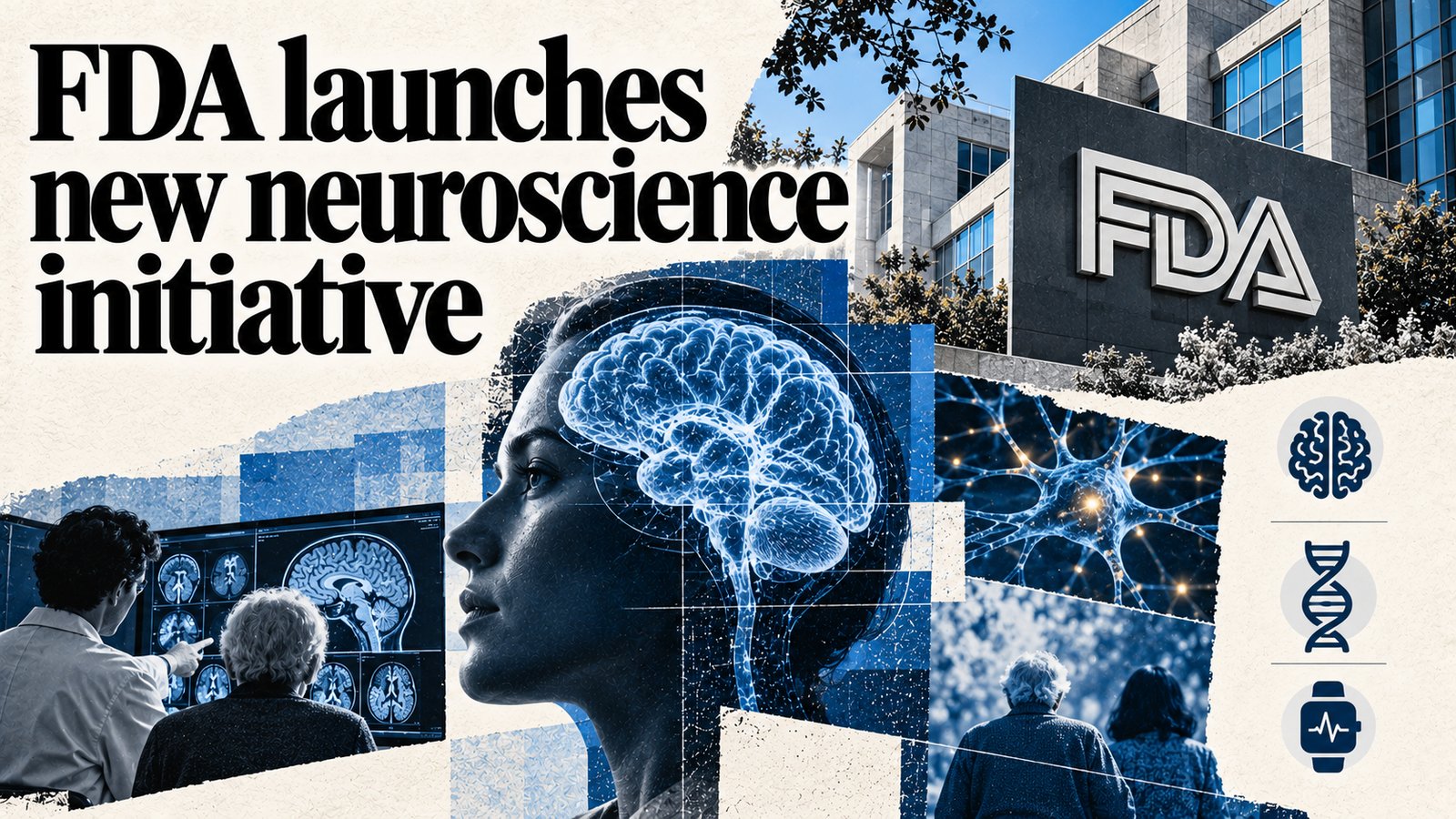
Key takeaways
- The U.S. FDA announced the Neuroscience Advancement and Innovation Nexus (NAIN) to coordinate regulatory science across drugs, biologics and devices for brain-related conditions.
- NAIN’s first effort, the Alzheimer’s Prevention Accelerator, will focus on trial designs, stage-appropriate endpoints and evidentiary pathways to demonstrate delay or prevention of cognitive decline.
- The program will use advances in biomarkers and digital health technologies to overcome long disease timelines and variable presentation in neuroscience product development.
Launch Overview
The U.S. Food and Drug Administration unveiled the Neuroscience Advancement and Innovation Nexus (NAIN) to tighten coordination across its drug, biologics and device centers and accelerate the pipeline for brain-focused therapies. Acting FDA Commissioner Kyle Diamantas framed the launch as a response to the Trump Administration’s push for faster medical innovation and a “proactive, coordinated approach to accelerating progress.”
Alzheimer’s Prevention Accelerator
NAIN’s inaugural initiative, the Alzheimer’s Prevention Accelerator, targets the most pressing gap in neuroscience: the ability to prove that a product can delay or prevent Alzheimer’s disease before symptoms emerge. Traditional trials struggle with decades-long disease courses, heterogeneous patient populations and a lack of validated surrogate endpoints. The Accelerator will convene patients, caregivers, academia, industry and other government agencies to test new trial designs, refine stage-specific endpoints and develop evidentiary standards that can satisfy regulators while shortening development timelines.
Cross-Center Collaboration
A core premise of NAIN is that emerging biomarkers and digital health tools can bridge scientific uncertainty. Recent advances in blood-based amyloid and tau assays, as well as wearable-derived cognitive metrics, promise earlier detection of pathologic changes and continuous outcome monitoring. By integrating these tools into the regulatory framework, the FDA hopes to reduce reliance on long, costly clinical endpoints and enable more adaptive trial structures.
Implications for Leaders
For medical-technology leaders, the launch underscores the importance of embedding biomarker development and digital health validation into product roadmaps now, rather than waiting for post-approval data. Companies that can demonstrate strong, regulator-friendly endpoints may secure earlier feedback and potentially smoother approval trajectories. By positioning themselves within NAIN’s collaborative framework, organizations can benefit from the FDA’s coordinated push toward preventive treatments.

Wearables and AI can narrow the gender gap in heart disease monitoring
Cardiovascular disease kills more women than breast, lung and chronic lung disease combined; WHOOP’s data and AI initiatives aim to provide gender-specific insights, requiring systematic integration.

Advocate Health to boost employee compensation by $846 million in 2027
Advocate Health will spend $1.24 billion on its workforce in 2027, raising the minimum wage to $20 and adding $390 million in new benefits.

FDA approves first factor XIa inhibitor to cut secondary stroke risk
The U.S. FDA’s clearance of Sunharbo (asundexian) adds a 26% risk-reduction option for post-stroke patients, but elderly bleeding risk requires careful use.