FDA panel backs Grail’s Galleri multi-cancer test, clearing path to U.S. market
An FDA advisory committee says Galleri’s benefits outweigh risks, but reimbursement, workflow and data-privacy hurdles mean health systems must act now to capture value.

Key takeaways
- The advisory panel’s endorsement removes the regulatory barrier, allowing Grail to submit a Biologics License Application within 90 days.
- Payers will likely require real-world evidence of stage-shift and cost-offset before covering Galleri, so early data-capture infrastructure is essential.
- Clinical integration demands a dedicated ordering pathway, result-interpretation team, and privacy-by-design data lake to meet HIPAA and emerging AI-regulation standards.
The FDA’s Oncology Drugs Advisory Committee voted 13-2 that Grail’s Galleri multi-cancer blood test delivers net clinical benefit, clearing the way for a licence application. The panel’s judgment was based on the trial showing a 20 % increase in early-stage detection across 50 + cancer types, with a false-positive rate of 0.7 % and no excess mortality (STAT). This regulatory green light eliminates the biggest uncertainty for health systems, but the commercial and operational challenges that follow are far from resolved.
License timing and submission strategy
Grail now has a 90-day window to file a Biologics License Application (BLA). For health systems that have already mapped out pilot sites, aligning the BLA timeline with internal budget cycles is critical. A delayed submission risks missing the fiscal year’s capital-budget freeze, forcing organizations to seek ad-hoc financing or defer adoption. Conversely, a rushed submission without robust post-approval study plans may trigger later FDA remits that could stall reimbursement negotiations.
Payer evidence requirements
Even with FDA endorsement, Medicare and private insurers have signaled they will demand real-world evidence (RWE) showing stage-shift translates into cost savings. STAT notes that the trial’s overall survival benefit was not statistically significant, a gap payers will focus on. Health systems should therefore invest now in data capture pipelines that link Galleri results to diagnostic follow-up, treatment pathways, and outcomes. Building a registry that feeds into an analytics platform can generate the needed RWE, but it imposes upfront IT spend and staff training.
Clinical workflow integration
Galleri returns a “cancer-type probability” report that must be interpreted by a multidisciplinary team. Institutions need to:
- Create an ordering protocol that flags eligible patients (e.g., age 50-80, no recent cancer diagnosis).
- Designate a “result navigation” team—oncologists, genetic counselors, and primary-care physicians—who can triage positive signals within 48 hours.
- Integrate the report into existing EHRs while maintaining de-identified data streams for research.
Skipping any of these steps risks delayed follow-up, higher false-positive anxiety, and potential liability under the new AI-act provisions that require explainability for algorithmic outputs.
Privacy and regulatory compliance
The Galleri assay uses proprietary AI models trained on millions of genomic samples. The forthcoming U.S. AI-driven medical device regulations will obligate providers to conduct bias audits and provide patients with model-explainability summaries. Establishing a privacy-by-design data lake now can satisfy both HIPAA and future AI-act requirements, but it entails negotiating data-use agreements with Grail and potentially limiting data-sharing with third-party researchers.
Action plan: 1. Map the BLA timeline to fiscal planning; reserve contingency funds for a possible 12-month post-approval rollout. Trade-off: early spend vs. delayed market entry. 2. Launch a pilot data registry that captures ordering, results, follow-up imaging, and outcomes; partner with a data-analytics vendor early. Trade-off: higher IT cost vs. stronger RWE for payer negotiations. 3. Define a clinical pathway with clear roles for ordering, result interpretation, and patient communication; embed decision-support alerts in the EHR. Trade-off: workflow redesign effort vs. faster patient management and reduced liability. 4. Implement a privacy-by-design data architecture now to meet upcoming AI regulations; engage legal counsel for data-use agreements. Trade-off: upfront legal/IT resources vs. future compliance risk.
By executing these steps, health systems can move from regulatory clearance to reimbursable, clinically integrated screening that captures the promised early-cancer detection benefits.
The panel concluded that the benefits of Galleri outweigh the risks.

Wearables and AI can narrow the gender gap in heart disease monitoring
Cardiovascular disease kills more women than breast, lung and chronic lung disease combined; WHOOP’s data and AI initiatives aim to provide gender-specific insights, requiring systematic integration.
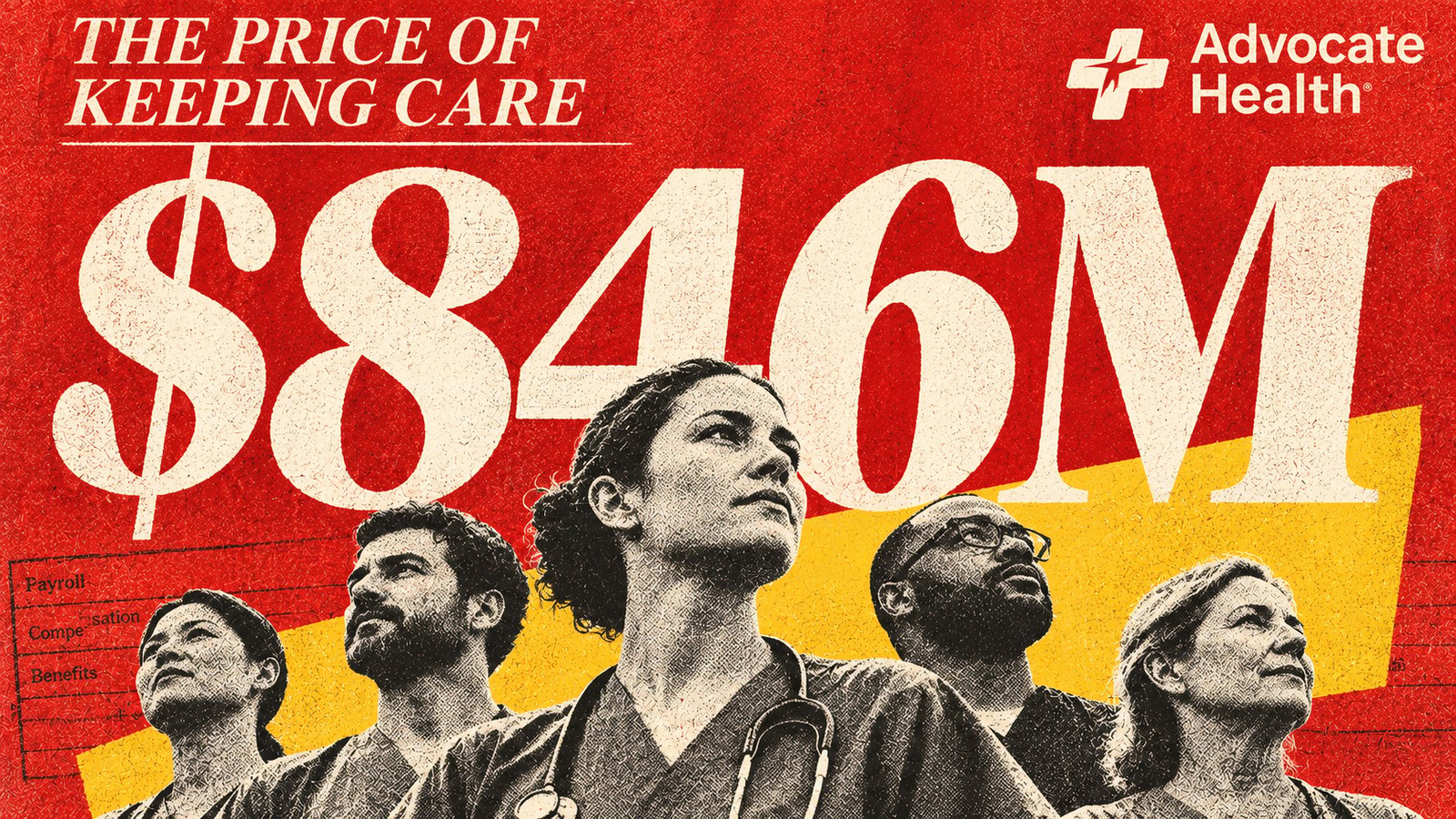
Advocate Health to boost employee compensation by $846 million in 2027
Advocate Health will spend $1.24 billion on its workforce in 2027, raising the minimum wage to $20 and adding $390 million in new benefits.

FDA approves first factor XIa inhibitor to cut secondary stroke risk
The U.S. FDA’s clearance of Sunharbo (asundexian) adds a 26% risk-reduction option for post-stroke patients, but elderly bleeding risk requires careful use.