Johns Hopkins joins OpenEvidence to embed AI in education and clinical workflows
The partnership will create “human-first” AI that merges evidence, patient history and Hopkins best practices, reshaping curriculum and bedside decision-making.

Key takeaways
- Identify high-impact clinical use cases where evidence-based AI can slot into existing EHR workflows, then pilot with measurable outcome metrics.
- Redesign curricula to separate competencies that can be off-loaded to AI from those that require human judgment, and embed AI tools in simulation labs.
- Establish a governance board to evaluate AI impact on decision-making, quality and patient outcomes before scaling system-wide.
Clinical Integration
Johns Hopkins Medicine and OpenEvidence have announced a collaboration to develop “human-first” artificial intelligence that fuses the latest medical evidence, a patient’s record and Hopkins’ clinical best practices. The goal, according to Sara Murray, MD, chief medical informatics and AI officer, is to “identify high-impact clinical use cases, develop solutions that fit naturally into how clinicians work and rigorously evaluate their impact on clinical decision-making, quality, and patient outcomes.”
The partnership signals a shift from stand-alone medical information tools to AI that is embedded directly in care delivery. OpenEvidence already powers a clinical decision-support platform used by 1.12 million licensed U.S. clinicians, and has integrated generative AI into health-system EHRs at Mount Sinai, Cedars-Sinai, Penn Medicine, NewYork-Presbyterian, AdventHealth and Northwestern Medicine. By building on this existing foothold, Johns Hopkins can accelerate deployment while testing integration points that align with its own workflows.
From an operational standpoint, the first step is to surface high-value use cases. These are typically scenarios where clinicians must synthesize large bodies of literature quickly, such as selecting oncology regimens or interpreting complex imaging findings. By embedding OpenEvidence’s generative models into the EHR, clinicians receive context-specific recommendations in real time, shortening the evidence-search loop from minutes to seconds. The partnership will pilot these modules in a limited number of departments, collect usage data, and compare outcomes—mortality, readmission rates, diagnostic accuracy—against baseline metrics.
Rigorous evaluation is a core pillar. Both institutions intend to run controlled experiments that track not only clinical endpoints but also decision-making processes. This includes measuring time saved per case, the frequency of AI-suggested actions accepted by clinicians, and any shifts in documentation patterns. The data will inform iterative refinements to the AI models and their UI, ensuring they complement rather than disrupt existing workflows.
Educational Transformation
From an education perspective, the joint effort will redesign medical school curricula to focus on core skills—pathophysiology, evidence-based medicine, clinical reasoning, diagnosis and patient communication—while delineating which competencies can be safely delegated to AI. Vice Dean for Education Sanjay Desai, MD, warned that unchecked “cognitive off-loading” could leave new physicians ill-prepared for unsupervised practice. He emphasized the need to map “physician-plus AI” tasks against those that remain inherently human, then create assessment frameworks that monitor competency gaps.
Operational Roadmap & Governance
To translate this partnership into actionable steps for medical leaders, consider the following roadmap:
- Map high-impact workflows – Conduct a cross-departmental audit to identify decision points where rapid evidence synthesis would alter care. Prioritize high-volume, high-risk pathways such as sepsis protocols or anticoagulation management. *Trade-off*: Narrow focus speeds pilots but may miss broader applicability.
- Integrate AI into the EHR – Work with OpenEvidence to embed generative-AI prompts within the existing EHR interface, ensuring single-sign-on and minimal extra clicks. *Trade-off*: Deep integration requires IT resources and may need vendor cooperation for custom APIs.
- Define competency boundaries – Collaborate with curriculum committees to chart which clinical judgments remain physician-only, which are “physician-plus AI,” and which can be fully off-loaded. Build simulation scenarios that test these boundaries. *Trade-off*: Redesigning curricula can disrupt established teaching schedules and require faculty training.
- Pilot and measure – Launch controlled pilots, collect quantitative metrics (outcome rates, decision latency) and qualitative feedback (clinician trust, perceived workload). Use a pre-post design to isolate AI impact. *Trade-off*: Pilots may delay broader rollout but provide essential safety data.
- Govern and scale – Establish a joint governance board with clinicians, data scientists, ethicists and risk managers to review pilot results, set standards for model updates, and approve wider deployment. *Trade-off*: Governance adds oversight layers, potentially slowing adoption, but safeguards against misuse and cognitive drift.
Financially, the collaboration sits atop OpenEvidence’s recent $15 billion valuation, following a $250 million funding round led by Byers Capital and Andreessen Horowitz. While the valuation underscores market confidence, leaders must resist the temptation to adopt AI for its own sake. The focus should remain on use cases with demonstrable quality or safety benefits, not merely on technology hype.
By following this sequence, medical organizations can harness the partnership’s promise while mitigating risks associated with rapid AI deployment.
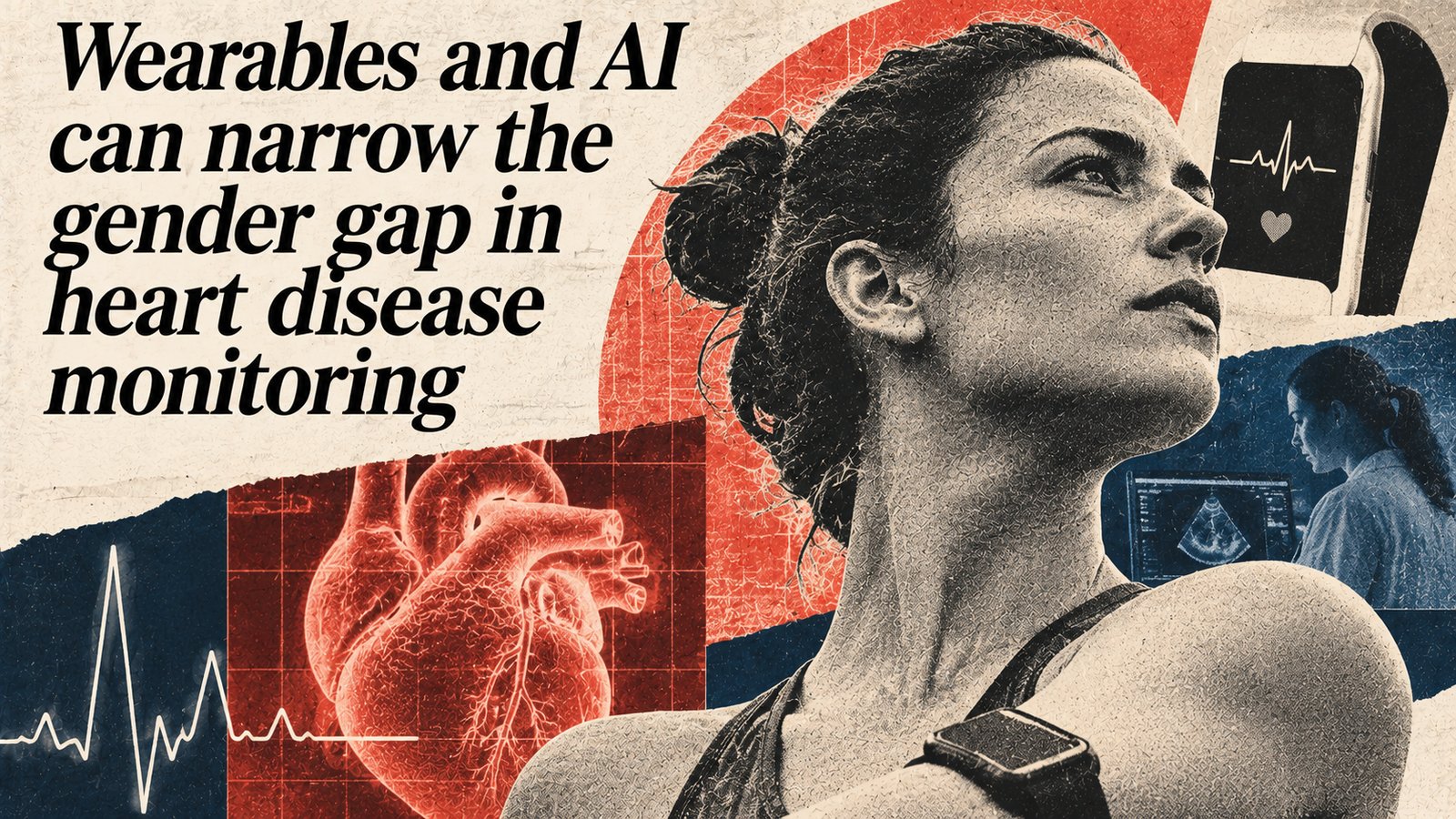
Wearables and AI can narrow the gender gap in heart disease monitoring
Cardiovascular disease kills more women than breast, lung and chronic lung disease combined; WHOOP’s data and AI initiatives aim to provide gender-specific insights, requiring systematic integration.
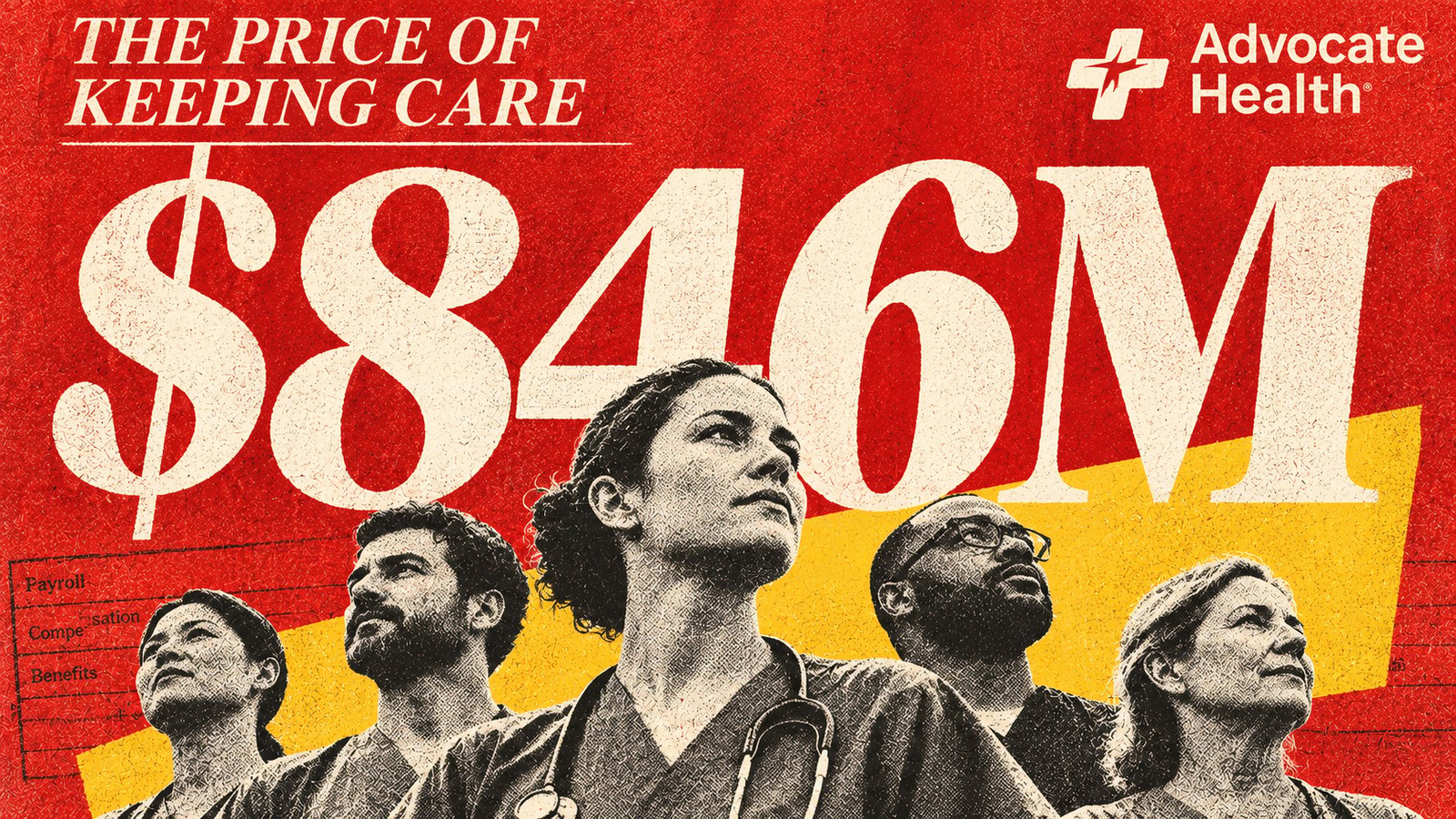
Advocate Health to boost employee compensation by $846 million in 2027
Advocate Health will spend $1.24 billion on its workforce in 2027, raising the minimum wage to $20 and adding $390 million in new benefits.

FDA approves first factor XIa inhibitor to cut secondary stroke risk
The U.S. FDA’s clearance of Sunharbo (asundexian) adds a 26% risk-reduction option for post-stroke patients, but elderly bleeding risk requires careful use.