Trump admin’s fee proposals threaten US biotech talent pipeline
Proposed $70k work-authorization fee, visa fraud probes and a four-year cap are already pulling down international PhD applications, forcing labs to rethink hiring.

Key takeaways
- Anticipate a 20%-plus drop in incoming international postdocs and graduate students and adjust recruitment timelines accordingly.
- Build contingency hiring contracts that can pivot to domestic talent or short-term contractors to cover critical projects.
- Engage institutional legal teams now to audit grant and visa compliance before the Labor Department investigations conclude.
The Trump administration’s latest immigration moves are reshaping the biomedical research workforce before any rule has taken effect. In two days, DHS announced a proposed $70,000 fee for the work-authorization program that most foreign students use for professional experience, while the Labor Department launched investigations into nine elite universities—including Harvard, Stanford and Yale—over alleged visa fraud for postdoctoral researchers. Together with a pending four-year cap on graduate-student stays and a revived $100,000 fee proposal for H-2B visas, these actions are already depressing international applications, a key source of talent for U.S. biotech.
Immediate impact on applicant pools
The Association of American Universities reported that domestic Ph.D. program applications rose 3% this year, but international applications fell 21%. The gap is not a statistical fluke; it reflects tangible uncertainty among prospective scholars who now face prohibitive costs and a higher risk of legal challenges. Laboratories that have historically filled senior research positions with post-doctoral fellows from abroad must now contend with a shrinking pipeline.
Legal exposure for existing hires
The Labor Department’s probe into nine universities signals a broader enforcement posture. While the investigations focus on alleged fraud in visa awards, the ripple effect will be heightened scrutiny of any institution that sponsors foreign researchers. Universities and biotech firms that have not rigorously documented compliance may find themselves implicated, potentially jeopardizing ongoing grants that require strict adherence to federal regulations.
Financial and operational fallout
Even though the $70,000 fee and the $100,000 H-2B fee are still proposals, the mere announcement is prompting candidates to reconsider U.S. options.
Strategic response for research leaders
To mitigate risk, leaders should adopt a three-step framework. First, reassess upcoming hiring plans and identify roles that can be backfilled with domestic talent, even if at a slightly higher salary. Second, establish short-term science-contractor agreements that can maintain project momentum while the visa environment stabilizes. Third, launch an internal compliance audit with legal counsel to certify that existing foreign hires meet all documentation standards, reducing the chance of being caught in the Labor Department’s net.
Each step carries trade-offs. Prioritizing domestic hires may elongate timelines while the talent pool realigns; contracting offers flexibility but often comes at a premium per hour and may lack the depth of a postdoc’s expertise; and compliance audits consume resources yet protect against costly penalties and grant suspensions.
Overall, the administration’s immigration agenda, though still in flux, is already reshaping the calculus of biomedical research staffing. By proactively adjusting recruitment strategies, tightening compliance, and diversifying talent sources, research leaders can safeguard their pipelines against the uncertainty that these policy moves introduce.
Action checklist
- Audit upcoming hiring needs – Map every position slated for foreign recruitment and rank by criticality. Trade-off: immediate clarity versus the time spent in analysis.
- Engage legal for visa compliance – Verify that all current visas and paperwork satisfy the latest Labor Department guidance. Trade-off: legal fees versus reduced risk of audit fallout.
- Create a domestic-first hiring policy – Shift budget allocations to prioritize U.S. graduate candidates where feasible. Trade-off: possible delay in filling niche skill gaps.
- Set up short-term contractor pipelines – Partner with staffing firms that specialize in scientific contractors to fill gaps quickly. Trade-off: higher hourly rates but immediate project continuity.
By following this ordered plan, biomedical organizations can preserve research continuity while the policy landscape settles.

Wearables and AI can narrow the gender gap in heart disease monitoring
Cardiovascular disease kills more women than breast, lung and chronic lung disease combined; WHOOP’s data and AI initiatives aim to provide gender-specific insights, requiring systematic integration.
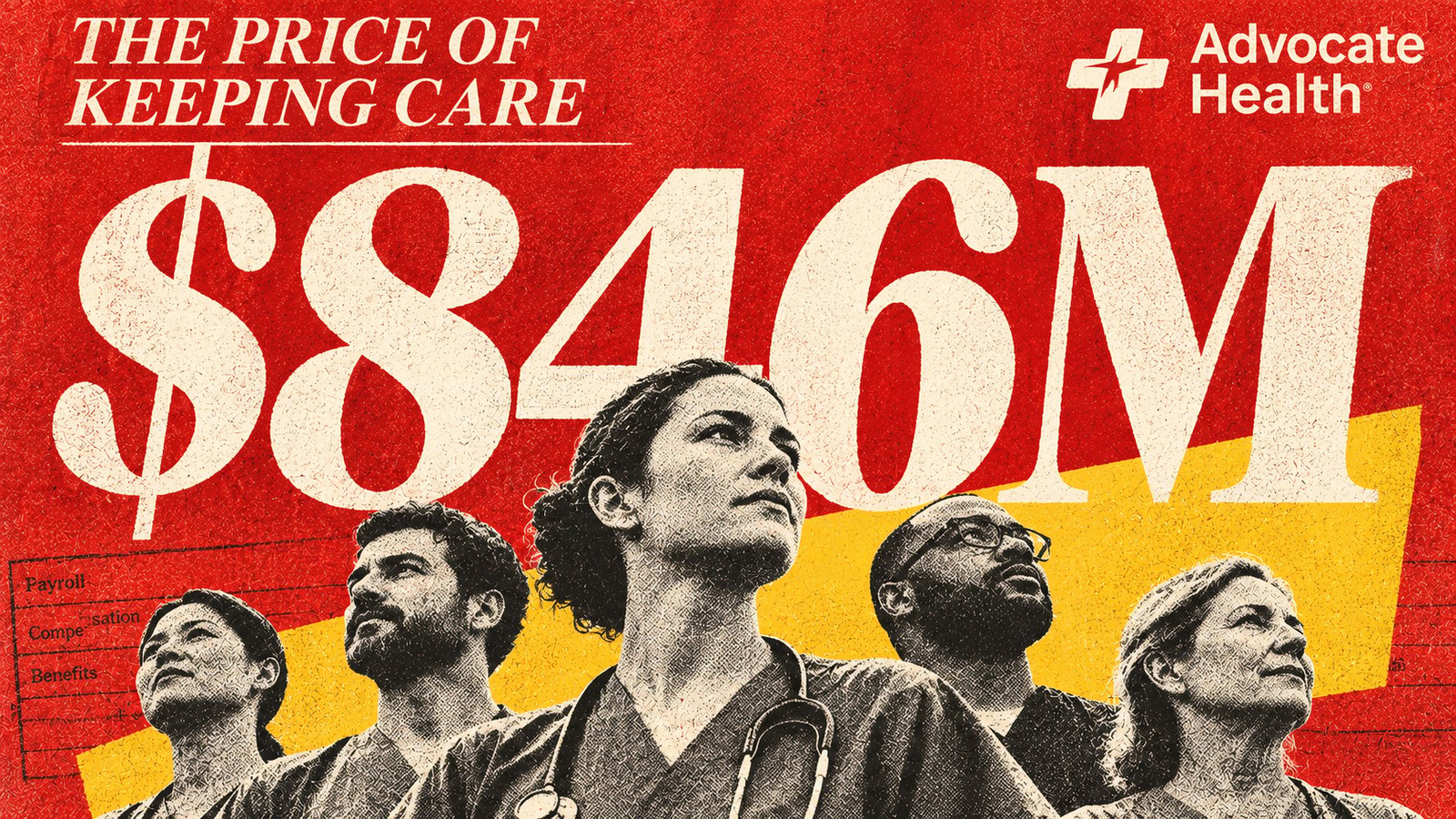
Advocate Health to boost employee compensation by $846 million in 2027
Advocate Health will spend $1.24 billion on its workforce in 2027, raising the minimum wage to $20 and adding $390 million in new benefits.

FDA approves first factor XIa inhibitor to cut secondary stroke risk
The U.S. FDA’s clearance of Sunharbo (asundexian) adds a 26% risk-reduction option for post-stroke patients, but elderly bleeding risk requires careful use.